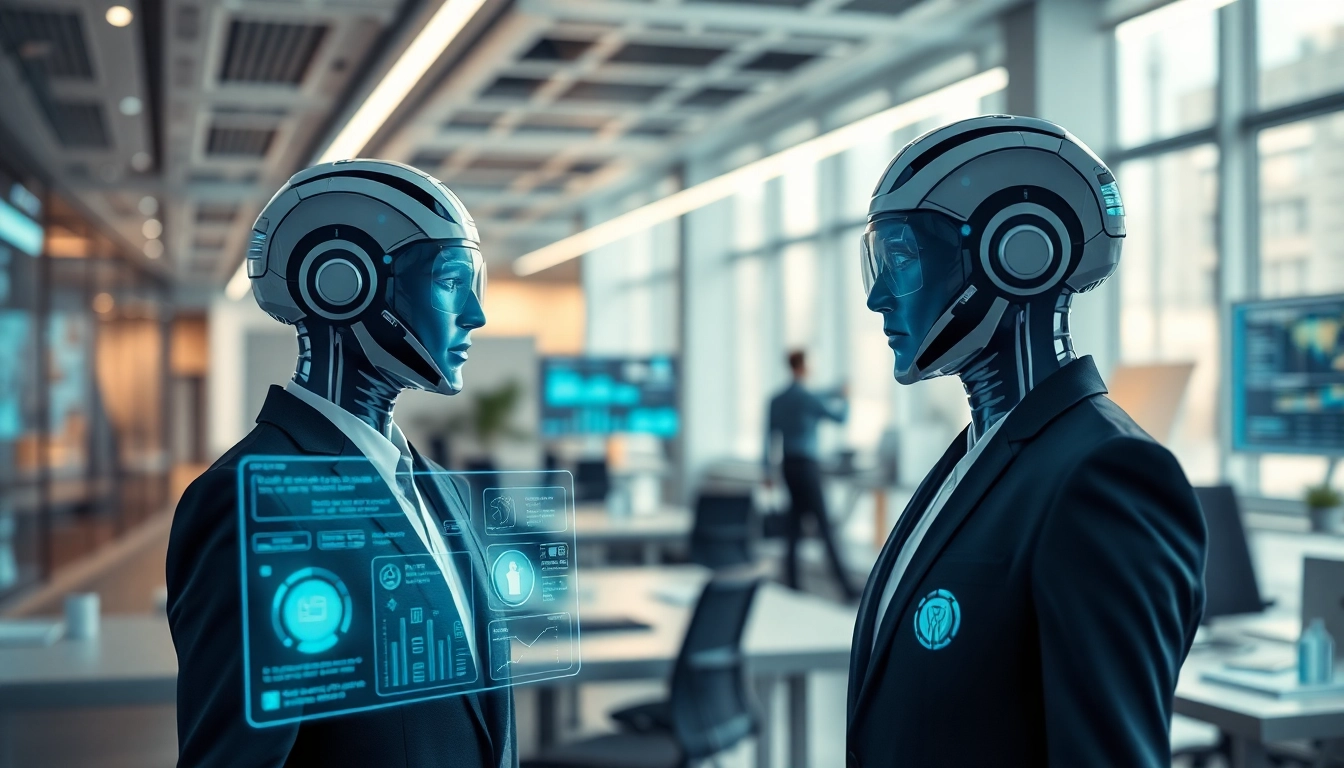
Introduction to Ai agents
Definition and Overview
In the ever-evolving landscape of technology, Ai agents stand out as one of the most transformative innovations in artificial intelligence. Defined as autonomous software entities that perceive their environment, these agents take actions to achieve designated goals. Unlike traditional software programs that rely strictly on pre-defined instructions, Ai agents possess a degree of autonomy and adaptability, often enhanced by machine learning capabilities. As intelligent agents, they utilize algorithms to learn from the data they collect, allowing them to improve their performance over time.
Importance in Today's Technology
As businesses and industries increasingly turn to automation, Ai agents play a pivotal role. Their ability to facilitate timely decision-making, analyze vast amounts of data, and perform repetitive tasks allows organizations to maximize productivity while minimizing the potential for human error. Furthermore, Ai agents can operate continuously without the limitations of fatigue that humans face, making them invaluable assets in environments demanding consistent performance. Their adaptability means that they can be applied in various sectors, including healthcare, finance, customer service, and supply chain management.
How Ai agents Differ from Traditional Software
The essential distinction between Ai agents and traditional software lies in their operational capabilities. Traditional software typically follows a fixed path dictated by explicitly programmed rules. On the other hand, Ai agents can adjust their actions based on environmental feedback and their accumulated experiences. This dynamic quality allows Ai agents to tackle complex problems that static programs cannot address effectively, such as real-time data analysis or providing personalized user experiences.
Core Functions of Ai agents
Task Automation
A significant advantage of Ai agents is their proficiency in task automation. By taking over mundane and repetitive tasks, these agents allow human employees to focus on more strategic responsibilities that require creativity and critical thinking. For instance, in customer service, Ai agents can handle common inquiries and provide assistance, freeing up human agents for more complex issues that need a personal touch. This transition not only enhances efficiency but also elevates the customer experience.
Data Collection and Analysis
Data is often referred to as the new oil, and Ai agents excel in collecting and analyzing vast amounts of data. By utilizing techniques such as natural language processing and machine learning, Ai agents can synthesize information from various sources, drawing actionable insights that inform business strategy. This capacity is particularly crucial as organizations seek to leverage data-driven decision-making, ensuring that strategies are not only reactive but proactive and predictive.
Improving Decision-Making Processes
Decision-making is a fundamental aspect of running a business, and Ai agents significantly enhance this process by providing real-time analytics and forecasting capabilities. They can analyze historical data along with current market trends, enabling organizations to make informed decisions. For instance, Ai agents can predict customer behavior and suggest marketing strategies that resonate with target audiences, thereby enhancing engagement and driving sales.
Types of Ai agents
Reactive Ai agents
Reactive Ai agents are the simplest form of Ai agents, operating solely based on the immediate input they receive. They do not retain past experiences nor learn from them. These agents are typically programmed to perform specific tasks in predefined scenarios, making them useful for applications such as game AI where the environment remains consistent. Their limitation lies in their inability to adapt or improve beyond their original programming.
Deliberative Ai agents
Unlike reactive agents, deliberative Ai agents have a more complex architecture that enables them to plan and make decisions based on their goals and the state of the environment. They leverage stored knowledge and utilize logical reasoning to weigh their options before executing actions. This capability is significant in applications like autonomous vehicles, where the agent must evaluate multiple factors in real-time to navigate safely.
Hybrid Ai agents
Hybrid Ai agents combine the strengths of both reactive and deliberative systems, allowing them to perform effectively in a wider range of situations. By integrating responsiveness with strategic planning, these agents can adapt to changes in their environment while also accumulating knowledge from their experiences. Hybrid Ai agents are particularly effective in complex environments, such as financial trading platforms, where rapid responses and strategic foresight are equally critical.
Implementing Ai agents in Business
Identifying Use Cases
The first step in integrating Ai agents into a business framework is identifying appropriate use cases. Successful implementations typically align with tasks that require automation, bolster efficiency, or enhance user experience. Potential areas include customer support chatbots, scheduling assistants, predictive maintenance in manufacturing systems, and personalized marketing. A thorough analysis of operational pain points can reveal where Ai agents could deliver the most value.
Integration Challenges
Implementing Ai agents is not without its challenges. Companies often face hurdles associated with data quality, integration with existing systems, and employee resistance to adopting new technologies. Addressing these issues requires a comprehensive integration plan, which includes establishing clear communication about the benefits of Ai agents, providing training to staff, and ensuring that data infrastructure is robust and capable of supporting advanced analytics.
Best Practices for Adoption
To maximize the success of Ai agent adoption, organizations should follow industry best practices. Starting with pilot programs allows for the testing of Ai agents in controlled environments, gaining insights into performance and user interactions before full-scale implementation. Additionally, fostering a culture of innovation will encourage teams to embrace AI technologies, ensuring that the organization is not just adopting Ai agents for the sake of it, but rather utilizing them to achieve strategic objectives.
The Future of Ai agents
Trends and Innovations
The future of Ai agents is filled with exciting possibilities and innovations. Advances in natural language understanding, machine learning, and neural networks are pushing the boundaries of what Ai agents can achieve. Trends such as sentiment analysis, multi-modal interactions, and increased personalization are becoming more prevalent, allowing Ai agents to interact with users in more human-like ways, enhancing engagement and satisfaction.
Potential Impacts on Workforce Dynamics
As Ai agents continue to evolve, their impact on workforce dynamics will be profound. While some fear that automation will replace jobs, it is more likely that Ai agents will lead to the transformation of work roles. Employees will shift towards more strategic tasks requiring human intuition, creativity, and emotional intelligence, while Ai agents handle routine or analytical tasks. This shift may foster new job creation in oversight, design, and Ai strategizing.
Ethical Considerations in Ai agents Development
The development and deployment of Ai agents raise critical ethical considerations that must not be overlooked. Concerns regarding bias in AI algorithms, data privacy, and accountability for decisions made by Ai agents are paramount. Companies must take a proactive approach to ensure that ethical guidelines govern the development of Ai agents, fostering trust and transparency while mitigating risks associated with misuse or unintended consequences of autonomous actions.
FAQs
What are Ai agents?
Ai agents are software entities that autonomously perform tasks, assisting users in various activities.
How do Ai agents enhance productivity?
By automating routine tasks, Ai agents allow users to focus on strategic activities, improving overall efficiency.
Can Ai agents learn over time?
Yes, Ai agents can learn from interactions and outcomes, enabling them to refine their performance continuously.
What industries benefit from Ai agents?
Industries like healthcare, finance, and customer service leverage Ai agents for enhanced efficiency and decision-making.
Are there ethical concerns with Ai agents?
Yes, appropriate guidelines and considerations are necessary to avoid bias and ensure responsible use of Ai agents.